…an engaging tale of fixation, retribution, and family riddles.
Kirkus Reviews
For only in destroying I find ease…
Paradise Lost, Bk. IX
Part 1 Venice
Chapter 1
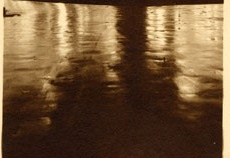
From where I sat parked in a red zone at the foot of Washington Boulevard, I could see the dark expanse of the Pacific Ocean and the white lines of foam where the surf curled and broke. A few feet away in the doorway of an untenanted store, a human form twitched violently under a blanket. When I turned off the engine, the downpour seemed to pound with new force on the car’s corroding roof. Outside, the black, wet pavement gleamed with slithering ribbons of reflected light.
I had been to Venice before. When I was ten years old. I went with my mother to see an old friend of hers. My father, an alcoholic professor of English Romanticism, could not come along on that trip and stayed behind in Berkeley, and I still remember being surprised at how different life was away from him—how pleasant and safe it felt to be far away from his acid comments and boozy smell and general disgust with life. I was amazed at the change in my mother, who was quiet and colorless at home, but self-confident and animated away from him.
My parents’ friends at home were all faculty, like my father. They were—so I thought—conceited people. I disliked them, and they ignored me. Maybe I was too young to appreciate them. But my mother’s old friend, Enid, was different. She lived right on one of the canals and near the beach. A writer of screenplays for what used to be called B movies, she loved to tell her outlandish stories, and I now see that her amazing gift for telling must have helped her to market her work. Her friends and neighbors were also movie people: other writers, editors, and production types. There was a woman who dyed fabric for costumes and a fat young man who painted pictures that were used in sets.
Enid had a canoe that she kept tied to a little dock outside her bungalow. Every day, she took me out in it and let me paddle. She liked to cook, and she put nasturtiums in salads. I went to the beach and learned to bodysurf. I always seemed to have sand in my bathing suit and salt on my skin. Up north, this same ocean had a different identity—numbing cold with lethal riptides. Now, so many years later, acting on impulse, I was back in Venice to visit someone I hadn’t seen for a long time.
Actually, I had come to LA as a favor to a friend, Professor Catherine Frankenstaad, who had directed my dissertation and for that year was Chair of the Renaissance Colloquium in San Marino. Suddenly and urgently, she needed a speaker to replace the scheduled and highly regarded authority on the tragedies of John Webster who had unexpectedly died. Catherine must have been desperate to have called on me, because I couldn’t at that time any longer have called myself a Websterian.
I’d left teaching in the aftermath of my husband’s death and had reverted to my old trade entered on in graduate school to provide needed income: formula romance writing. Until my marriage, I never had so much money before in my life, and there was also the fun of creating historical settings and pushing trite plots off of their centers.
Catherine did not approve of this vocation, and we had friendly arguments about it. But I wouldn’t go back to the University. The associations were too painful: that was a different life.
But now she needed a Websterian, and I had an unpublished essay that was a close enough fit for her panel and that I could update. I was glad to be able to do something for her, and I had to admit that the idea of working on a serious project was intriguing. Predictably, as the day of my presentation approached, the whole business of preparation became rather pressing. I wanted, of course, to do a good job. I also wanted not to embarrass myself. These are both good goals. My publisher had left an excited message about some proofs of my current novel that needed attention, and I planned to call him back that evening. But he is a hypochondriac, and a conversation with him is always a commitment of at least forty-five minutes.
I had driven down to Venice to see my cousin, Katy. She had once been my closest friend, but I hadn’t seen her in years, and that had seemed for the best, not that any definable break had taken place. We were the children of two brothers who had become parents in middle age, and as I sat there in the car with the rain coming down, I considered, not for the first time, the possibility that our friendship had merely been the consequence of being set against the grownups which, along with our shared sense of embattlement, adulthood had dispelled. Our conversations had grown strained, and it seemed as though, more and more, we disapproved of each other. After awhile, we just lost touch.
The truth was that Katy’s mental problems made her difficult. She was gifted, but as a teenager, her mood swings could no longer be ignored and increasingly disturbed her comfortable and pleasant home. With her parents, my uncle and aunt, she visited psychotherapists, at last settling on a psychiatrist who prescribed anti-depressants and saw her through her high school and undergraduate years. She managed fairly well, as long as she took her medication.
Katy left graduate school after her Ph.D. exam and without taking the degree. She worked as a janitor for a San Francisco film director, became an apprentice editor, then an assistant editor, and so on, and eventually, she was working fairly steadily on feature films. But the long hours, pressure, and constant fear of failure were not healthy for her, and her work suffered. She was fired from a job, and then from another, and after that, no one wanted to hire her. She decided that she was finished in post-production, moved south to LA, and stopped returning my (infrequent) calls. The last I heard, she was working as a freelance story reader for a script agent. After my uncle died, I no longer had news of her.
I had made a serious mistake of judgment. I didn’t have time this evening for a detour from my project. I’d spent the day in a UCLA Library cubicle reading up on lycanthropy. As the hours passed, the library cubicle had grown cold, and the aged Mazda, borrowed from friends, was unheated. I had on warm clothes—jeans, heavy wool sweater over a silk tee shirt, wool socks, and running shoes. But in the library, cold had seeped into my bones, and now I was going to get wet. I had a full evening’s work still ahead of me, and I’d stupidly set myself up to pay this visit before I could get to work on my project.
I wouldn’t call myself compulsive. In my current line of work, I’m productive without pushing myself unduly. But someone else’s clock was running, and my Colloquium commitment hung over my head like an axe. My hand moved to the key in the ignition. Just go. Forget the whole thing.
There were other things that I wanted to forget, but that came back, sometimes, with all the cruel vividness of unwanted remembrance: what the doctor said—no treatment, not much time—and Alan’s way of telling me with the usual kindness, more concerned with my feelings than with his own impending ordeal. Twenty-three days after the diagnosis, almost two years ago, he was dead.
I was teaching at the University. My friend Ed came back early from his sabbatical and took over my classes. I just stayed home. Even now, like the phantom limb, the neurological memory of a body part that no longer exists, Alan is there and not there.
Rainwater streamed over the car’s windows. Everything outside was blurred.
After no communication for about three years, Katy sent me a postcard. In a way, I was pleased to hear from her. But I also felt the familiar uneasiness—and the shame that it always brought with it—at the possibility that I’d have to cope with her in a bad state and with feeling abandoned and resentful when she withdrew into herself, which could happen without warning at any time. Then, too, both of her parents were dead. My father was, let’s say, not an attentive uncle. What would I have to do if she needed help?
So, I put off thinking about the postcard until, as I was packing for my flight to LA, feeling briefly but intensely alone, I felt an old pull and picked up the phone. My memories of Venice were another draw.
For October in Los Angeles, it was cold—56 degrees, according to the digital sign on a Santa Monica bank. The image formed in my mind of my audience at the Colloquium, polite academic men and women growing bored and even resentful, shifting in their seats, their patience sorely tried by my uninteresting, droning presentation. What I really wanted was dinner, a bath, a chance to call my publisher, a few hours of work, and bed. Instead, I faced not only a soaking, but also a reunion that I no longer wanted and that almost certainly would prove uncomfortable. Well, I thought, I could go back the way I had come and still salvage the evening. There was that option, but I wasn’t going to exercise it.
I released the seat belt catch, opened the door, and stepped out into the rain. I opened my umbrella, locked the car, and breathed in beach air, for once, without enjoyment. This was not the Venice I remembered.
The nearest streetlight on Ocean Front Walk was out, so I walked in the dark and couldn’t see clearly in the heavy rain. Some of the apartment buildings and houses were dark, too. Some had barred windows. On my left were the deserted beach and the rhythmic boom of the surf. Wind blew the rain under the umbrella and soaked my clothes. I had decided to head back to the car when I saw, just a few feet away, the address Katy had given me over the phone.
It was a low, U-shaped stucco 1920s vintage building with apartments facing each other across a narrow courtyard and a desolate little strip of sand running down the middle. An upright piece of rusted pipe in the center suggested an earlier time of fountains and high expectations. The apartments had French windows and glass paned front doors—amenities recalling a sunnier time. All of the windows but one were dark.
Katy lived in Number 2, and it was lit inside. Purple madras bedspreads served as curtains. I knocked, but no one came to answer. I knocked a second time, and still there was no response from inside. I turned the glass doorknob, and the door opened.
Time slipped away, and I was, or so it felt, in another world in which past and present fused dishearteningly in a small, humid, dimly lit studio apartment. It was the apartment of university days, but sadder because the tenant was not an undergraduate with all the promise of life ahead, but a middle-aged woman on a crash dive.
“Katy?”
I stood still for a moment and took in the depressing scene. There was the run-down building’s characteristic odor of mildew mingled with leaking gas. There was a sagging couch upholstered in faded red brocade and a Murphy bed, clothes-strewn and unmade, with the bottom sheet pulled back at one corner of the bare mattress. The butt ends of two wires dangled from a disused ceiling fixture site. Someone had tried to patch the crumbling ceiling plaster with masking tape, but the tape had come loose, and brown strips of it dangled and drifted in the air currents. The only light came from an antique brass floor lamp with a decaying and torn silk shade that gave a yellow cast to the room.
When I saw the stained oak desk, I closed the door. This was the right place. Notebooks, pencils, some FedEx and manila envelopes were neatly arranged in a pile, and on top was a jar with something black in it. In this respect, Katy had not changed, for in her work, she had always been scrupulously organized. A portable typewriter occupied one corner. There was no computer.
At the center of this orderly tableau, positioned as though for emphasis, was an object which powerfully evoked the past. A big, very thick book with a loose front cover: The Complete Dictionary of the Latin Language, published in 1887, compiled by S.R. Anderson. That cover had been loose when I bought the book as a gift for Katy in a Clement Street bookshop years ago.
I’d meant it as a kind of gag. But seeing it there on that desk brought to mind one of the best things about our friendship. “Anderson” was a specialist’s tool, and Katy had received it with a smile of real enjoyment. A good joke this was, to give such a thing to a modernist who had no use in the world for it, a gift from a Renaissance scholar to a student of an intellectually and artistically eroded period. Katy had understood this unspoken meaning and had taken no offense. She also understood that I saw myself as the less talented of us two, though she herself, as “Anderson” now eloquently reminded me, was generous and did not respect such comparisons.
I sat down at the desk. A key on a safety pin lay beside snapshots grouped in a heavily tarnished silver frame: Katy’s father in tennis whites beside my father, his brother, in derelict fishing clothes, the sapphire waters of Lake Tahoe behind them and the purple mountains of Nevada against the sky; Katy’s parents in front of their house on 30th Avenue with Pudgy and Duke, two beloved and obese beagles, like their master and mistress, now gone; Katy at the wheel of her Mercedes Benz two-seater. I remembered when we took that picture and several others, at least one of them with me in the driver’s seat. I also remembered the time we drove to Calistoga for mud baths. Katy had run out of medication and was too busy with school to refill her prescription. She scarcely spoke to me during that whole weekend.
I looked around the room. Maybe it was pleasant during the day with the sun shining in and people about—the place was, after all, right on the beach. But that night, in the rain, what a sad, messy, bad-smelling place, and it hurt to think of my cousin living in it.
What had happened to Katy’s movie earnings and the inheritance from Uncle Edward? Mental illness is expensive, especially if it keeps you from working. What about drugs? Not likely. She didn’t like the taste of alcoholic drinks, and marijuana bored her. She never showed, at least around me, the slightest interest in trying anything stronger. She had her own way of coping with fear and unhappiness—obsessive and usually quite brilliant work, her drug of choice. How she’d found her way here was, I was sure, a long story, some of which I would hear tonight, like it or not.
My watch said 6:10. I decided to wait another five minutes. The arrangement for this evening was between 5:30 and 6:00, depending on traffic. I hadn’t called to confirm when I got into town. But there was Anderson set out as a welcome. There were the family pictures—I was in the right place. Yet, I was beginning to feel vaguely uncomfortable. It is usually better to let the past alone.
I took a folder from one of the neat piles on the desk and opened it. The pages were typescript on old-fashioned onionskin paper—where had she found it?—beginning with the title, Alfred Hitchcock: Artist of the Unconscious. This looked like the senior’s thesis that Katy had planned to work into a dissertation. It had seemed to me at the time so much better than anything I could have written.
I reached for the next folder in the pile. More onionskin continued the work.
What else was there? In a spiral notebook, handwritten pages of an immense annotated bibliography listed works on film, psychoanalysis, myth, cultural anthropology, Jung, Frazier, Campbell, Roheim, Ovid, the Grimm brothers, Bettelheim, Freud, Dante, Stekel, Sophocles, and so on, and on. Sources already consulted were identified, page numbers referenced, extensive notes taken on each work. She had consulted about a third of the works on her list. From the look of things, she was working her senior’s thesis into a book.
This was familiar territory: Katy had numbered each page in the spiral notebook by hand. I found my San Francisco phone number scribbled on the inside of the front cover along with my LA phone number and the address of the Miller Place house in West Hollywood where I was staying. I remembered something else: how hard it was for Katy to finish anything. There was always one more source that had to be read, and one more edit. When the work was due, there was always torment and the gloom that came from the grim conviction that, whatever she had done, it wasn’t good enough, ever.
The room was warm, and I unbuttoned my jacket.
One thick folder lay by itself. Inside on loose lined sheets, in typescript, was verse, a long poem that stretched out for about 50 pages. The title, Cantos of Malediction, turned out not to be inappropriate.
Man-vermin! Child of slime! Earth scum!
Dweller in feces, worshiper [sic] of garbage,
Defiler, defiler, adorer of death.
Bane of creation, Sathanas’ whore:
Malediction upon you, malediction perpetual!
Oceans ubiquitous, lands to have deluged,
In vain seek repose, howl for oblivion.
Despair be your comfort, agony your pleasure,
Orgasm of filth…
Enough. I put the pages down. Katy wrote this? Best not to bring it up.
The wall heater switched on, and, despite the near tropical warmth of the room, I began to notice that my feet were cold. A current of cold air was drifting across the floor. I didn’t really need to turn around to know what I would see, but I turned anyway.
The kitchen was dark, but the edge of the back door was visible. At that moment, I was struck by my own stupidity, because risk is attached to an open door in a dark, run down area where people lie twitching in doorways.
I took a breath. At least now I understood the warm body-cold feet phenomenon. The heater was in the living-bedroom, and so was the thermostat, but it was directly in line with the open back door, so that the cold air from outside kept the heater going. I went into the kitchen to close and lock the door before leaving. I felt for, but did not find the light switch.
The inner side of the back door and the frayed curtain covering the glass pane were wet with rain. Had someone been here while I sat in the other room? Had Katy come in and left again, ambivalent as I was about our reunion and in a dark mood?
As I took hold of the wet doorknob, the perception of something odd in the room flickered at the edge of consciousness. A slow, fluttering movement of cloth—murky purple, like the curtain in the other room—and the electrifying perception of a skirt as the thing itself came into focus, crouching in that dark kitchen, backed against the refrigerator. Her hair covered her face, but I knew her.
Chapter 2
 I had seen dead people before.
I was twelve years old when my mother died. Coming home from school, I knew what had happened as soon as I saw my uncle’s car parked outside our house on a weekday. I went into her room on the warm September afternoon of her death and saw her wasted face and body still and lifeless, like a wax figure. When my husband died, I was with him. I was prepared for both of these deaths, as much as one can be. But I was not prepared for what I found that night in Katy’s kitchen. The figure in the shadows was my cousin. Something held her to the door of the freezer compartment.
I don’t know how I got myself out of there. I think I backed out, and I made it outside before vomiting. Then I headed for Washington Boulevard and called 911. I’d left my umbrella behind in the apartment. Heavy rain was still coming down.
I waited in the car for the police. Three men came out of a liquor store and stood in the doorway. They glanced at the man under the blanket, and one of them said something that made them all laugh. Now, the proximity of other human beings gave comfort. Anything was better than Katy’s kitchen. I listened to the wind and the rain slapping against the car.
The police came, and so did the medical examiner, and I went back to Katy’s apartment with them. I sat for a long time on the couch. There were wine rings in the layer of dust coating her coffee table. A woman officer was going through Katy’s things. There was a large man in running shoes and a wet, rumpled raincoat. He had a receding hairline, acne scars, and a doleful but sympathetic face. The couch groaned when he sat down on it to ask me questions.
After awhile, Katy left on a gurney under a green plastic sheet. I watched the medical examiner’s men push the gurney across the room and ease it down the front steps. Their shoes and the little wheels made scratching sounds on the wet, sand-strewn pavement outside.
I don’t remember much that happened during that second visit to Katy’s or later in the inspector’s police station cubicle. I don’t know how much time I spent there. I do remember that someone offered to drive me home, but I asked to be driven back to my car and drove with the windows open and the rain blowing in. I stopped once to vomit for the second time, opening the door and leaning out over the street. I shouldn’t have been driving, because I was like a drunk.
The rain had flooded some of the storm drains, and on San Vicente, a large coral tree branch was down in the eastbound fast lane. It started to rain again as I turned from Barrington eastbound onto Sunset. Visibility was poor, and water washed across the roadway like a tide. But I managed to get myself home, which, in this instance, was the borrowed house of a friend and her mother who were out of the country, a little hacienda type of place perched up above Sunset Boulevard on a narrow winding street, Miller Place.
The housekeeper had left lights on, and I closed the door on the storm. The contrast between this place and where I had been could not have been more extreme. In the comfortable, elegantly furnished living room, full of color and art, ambers and deep roses, I felt, reassuringly, the presence of my absent friends. This was real and Venice a hallucination.
Weak-legged, I held onto the banister going downstairs where the bedrooms were. I stripped off my wet clothes and brushed my teeth to get rid of the taste of vomit. I ran hot water in the long tub and undressed. A key on a safety pin was in my pocket. How had it come to be there? I could not remember. I do not fall apart anymore, I told myself. I will eat. If possible, I will sleep. I will go to the Renaissance Colloquium and fulfill my commitment.
The kitchen was large, bright, and designed for efficiency. There was a huge restaurant stove and a stainless steel refrigerator with a sub-zero freezer. Even now, refrigerators and kitchens remind me of that night and Katy as I had found her.
I drank some ginger ale and felt better, then tried grapefruit juice, and that also helped. In the freezer was frozen chicken soup, which I thawed out in the microwave and had with some egg noodles in it. I turned on the television on the butcher-block kitchen table and watched a PBS program about sharks while I ate. The rain stopped, and the vastness of Los Angeles spread out below, glittering with that brilliance that cloaks its banality at night.
There was no point in trying to work. I went to bed, and Sunset Boulevard carried out its night business down the hill—a smash-up, horns, brakes, yelling.
Opposite the bed, a small, wintry Pissarro oil hung on the wall. In the dark, I could see the general pallor of the scene. I tried to picture the details—trees without their leaves, a curving country road, a wall with snow banked up against it. There were small human figures in the middle distance. What else was there? I tried to concentrate on these things, and not on what pushed its way into consciousness at every opportunity: the crouching figure in the dark and my guilty, selfish self.
For years, the story that I told myself was, well, I could take or leave the relationship with Katy, and would probably leave it, never bothering to talk with her, my oldest friend, about our differences and our gradual alienation from each other. I had my own troubles, but even before Alan’s illness, I had just turned away. Now I hated my self-absorption, my concern with projects and time management—as if it were possible, ever, for human beings to manage time—and my own cowardice. I sat up in bed and cried because I would never see her again.
But then I saw another way to look at what had happened. I switched on the night table lamp.
Katy and I had not been in contact for several years, except for a rather stiff phone call after Alan died. Then, she had sent the postcard, and we’d had a pleasant enough conversation and planned my visit. What occurred to me as I sat in bed was horrible. The invitation, the arranged meeting, the unlocked front door, even the back door ajar: all of these things suggested a most peculiar and ugly interpretation of events, that my cousin had planned her own death and orchestrated my visit so that I would be the one to find her. I actually entertained this insane idea for a moment.
I tried to focus on the quiet winter scene on the wall. It was like Celia’s mother to hang such a valuable painting opposite her bed—exactly where she would enjoy it most—rather than in the living room to be exhibited to guests. The noise from Sunset had quieted. I switched off the light, and lay down again. There is a limit to what you can face at any one time, and just then, all I could try to manage was that my cousin was dead and had suffered badly, that I could have helped and didn’t, and that I was now alone in a new way.
With the black outside turning gray, at last falling asleep, I remembered something I’d once read about the Middle Ages: that in those times, suicides were buried at crossroads. Having died in a state of sin, they were ineligible for burial in consecrated ground. Whatever suffering had led them, deprived of hope and in defiance of the teachings of their Church, to forfeit life and God was to extend without termination after death. At the crossroads, the soul was to be suspended forever in a state of isolation, without mobility allowed—however much crossroads invite movement in one direction or another—with the configuration of the roads a grim parody of the Cross, symbol of mercy, up to a point.

Available @ Amazon and Barnes & Noble.
City Hall at Night During a Rainstorm: historic photo courtesy of the San Francisco History Center, San Francisco Public Library
 K.M.Wood. Death by Revelation